Neutrons induce various types of nuclear reactions such as scattering, capture and nuclear fission. The types of reactions induced depend not only on the elements involved, but also the geometrical characteristic of the irradiation samples, such as volumes and shapes. As neutron is utilized in a variety of fields, e.g. medical, radioanalytical chemistry, and nuclear security, it is of particular importance to understand the behavior of neutrons in various media.
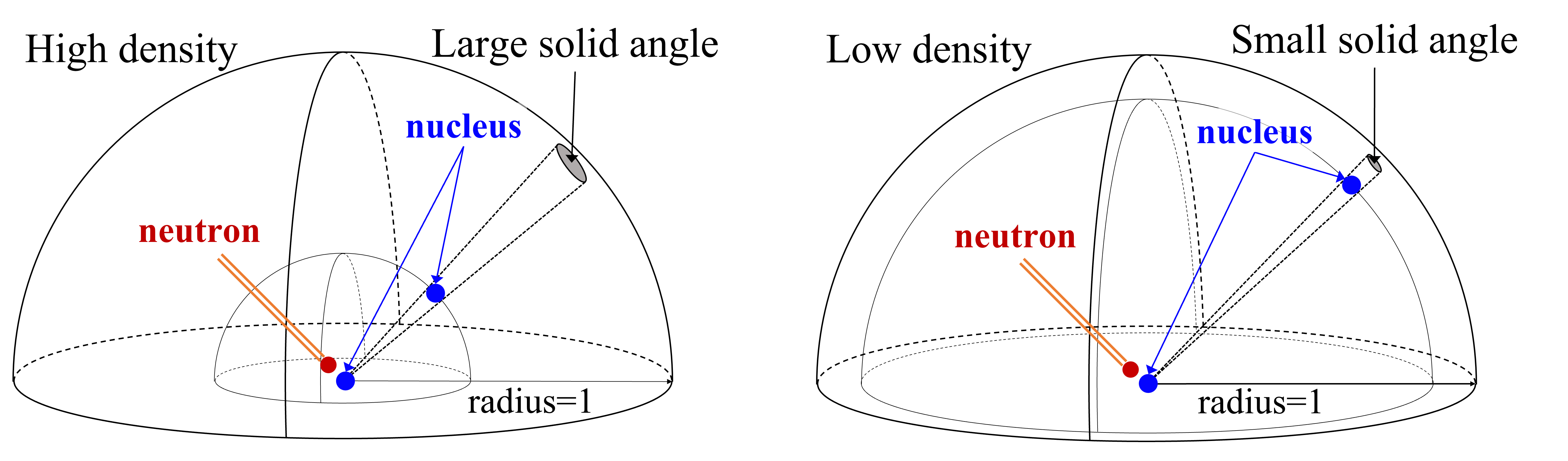
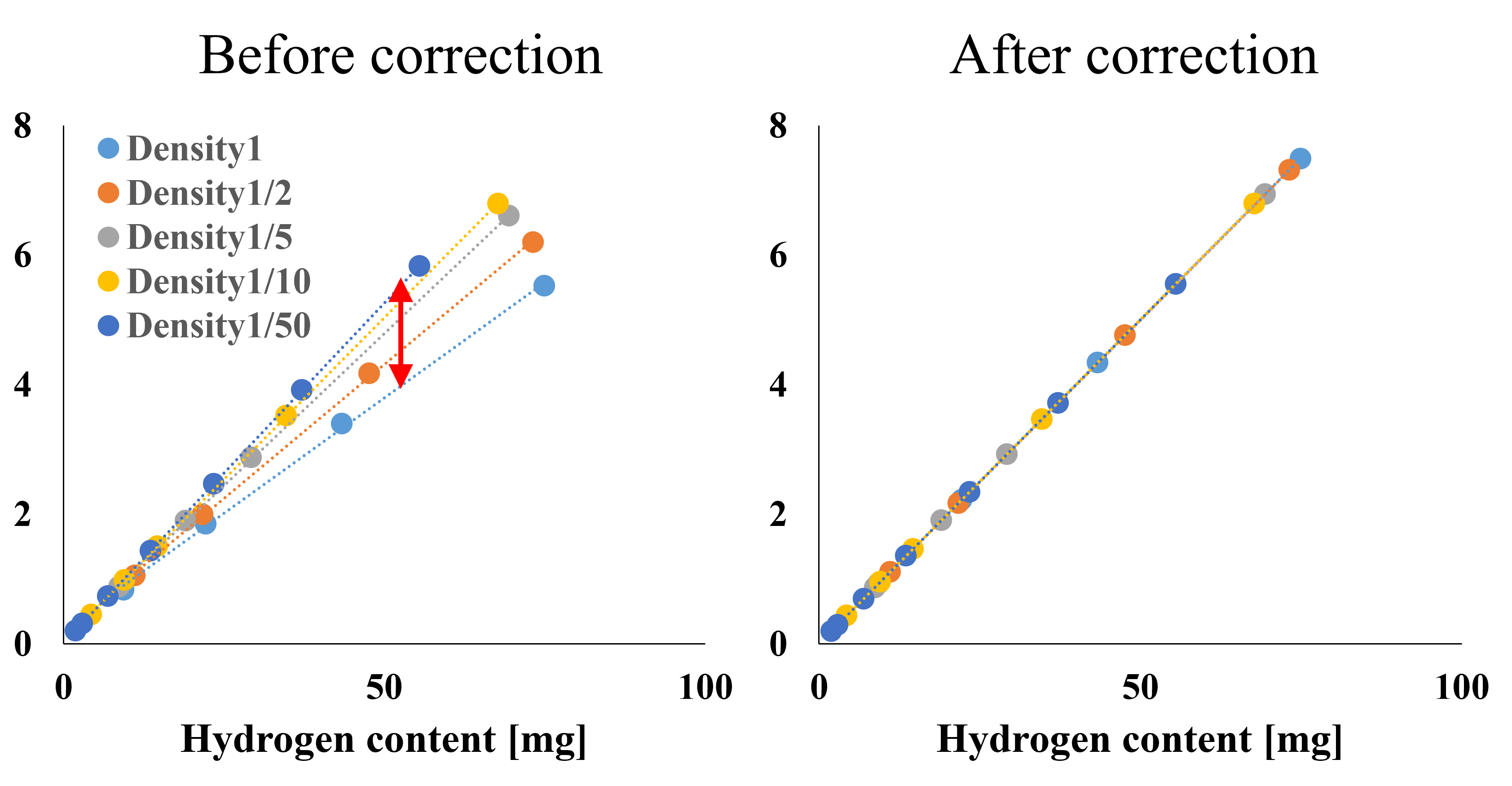
Conventionally, it is thought that the change in neutron energy in the scattering depends solely on the amount of scattering material. In this study, however, we found that in the case of easily-scattering material of neutron (e.g. hydrogen), not merely the amount but also the density of the scattering material affect the variation of neutron energy because it affects the number of scatterings taking place.
These findings will become a new bedrock for the accurate non-destructive assay of, to name a few, nuclear materials which is important in nuclear terror prevention, and chemical elements in artifacts of archeological importance. Further, the principle is also thought to be applied to the design of advanced neutron shielding to efficiently reduce neutron energy by carefully controlling its material density.